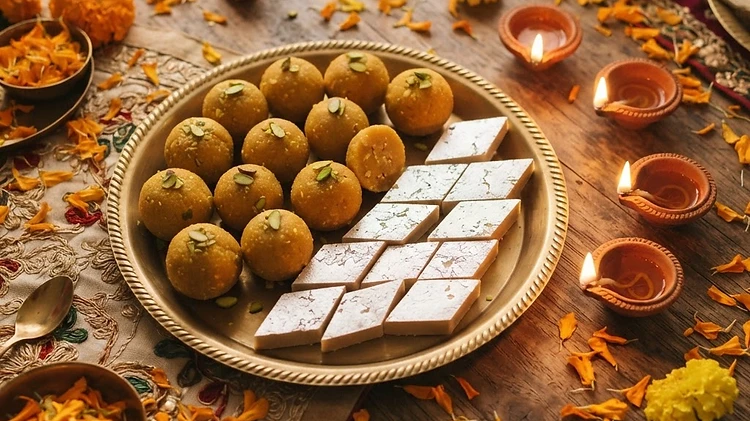
Besan Ladoo (Diwali Sweet)
Golden gram-flour ladoo roasted slowly in ghee with cardamom and nuts — the Diwali sweet families make at home.
Explore by hashtag
Total time
35 min
Servings
12
Difficulty
Easy
Cuisine
Indian Sweets
Ingredients
- 2 cups besan (gram flour)
- 3/4 cup ghee
- 1 cup powdered sugar
- 1/2 tsp ground cardamom
- 2 tbsp slivered almonds
- 2 tbsp chopped pistachios
- 1 tbsp raisins (optional)
- 1 tbsp warm milk, if needed
Halal Info
Besan ladoo is naturally well-suited to halal dietary requirements as it relies entirely on plant-based flours, ghee, nuts, and sugar. The primary consideration for a Muslim cook is ensuring the ghee is derived from a halal source, specifically cow or buffalo milk, and that it contains no animal-derived emulsifiers. Cooks should carefully check the packaging of powdered sugar, as some industrial sugars are processed using bone char. If unsure, organic or unrefined sugar is a safe alternative to ensure the dessert remains strictly halal.
Instructions
- 1
Heat the ghee in a heavy pan, add the besan and turn the heat to low.
- 2
Roast the besan for 15 to 20 minutes, stirring constantly, until it darkens to a warm golden brown and smells nutty. Do not rush this.
- 3
Take the pan off the heat and let the mixture cool for 5 minutes so it is warm but not hot.
- 4
Stir in the powdered sugar and cardamom until smooth, then add the nuts and raisins.
- 5
If the mixture looks dry, add a spoon of warm milk; it should hold together when pressed.
- 6
Let it cool until you can handle it, then roll into 12 balls, pressing firmly.
- 7
Cool completely, then store in an airtight jar for up to two weeks.
Food History
Besan ladoo originated in the northern regions of the Indian subcontinent, emerging from the ancient culinary tradition of using roasted pulse flours to create shelf-stable confections. Historians note that the use of gram flour, known as besan, was a practical solution for producing nutritious sweets in climates where dairy-based products might spoil quickly. The refinement of the recipe over centuries reflects the evolution of milling techniques and the wider availability of clarified butter and aromatics across the Indian plains. While specific dates for the creation of this dessert remain undocumented, it is widely accepted that besan ladoo was a staple in domestic kitchens long before commercial mass production began. The technique relies on a precise Maillard reaction during the roasting process, which transforms raw flour into a nutty, aromatic base. Its enduring popularity stems from its simplicity and the modest list of base ingredients, which allowed it to persist across generations as a fundamental culinary skill.
Cultural Background
In North India and beyond, besan ladoo serves as a primary offering during festivals such as Diwali and Eid, symbolising prosperity, joy, and the warmth of hospitality. It is a traditional gift exchanged between households to strengthen social bonds, often prepared in large batches to accommodate guests. Families take pride in the specific texture of their ladoos, with regional preferences dictating whether the finish should be smooth or slightly gritty. In some areas, the inclusion of chopped nuts or melon seeds is standard, while other communities prefer the simple, unadorned version. The act of rolling the warm mixture into spheres by hand is considered a communal activity, linking generations through shared kitchen labor. Because it requires no specialized equipment or refrigeration, the sweet remains a quintessential symbol of home-based celebration, embodying a sense of communal belonging that transcends specific religious festivities or regional boundaries.
Nutrition
Approx. 210 kcal per ladoo, 4g protein, 22g carbs, 12g fat.
Recipe by HalalRoute Editorial · Updated Oct 27, 2026
HalalRoute
Recipe Book
The HalalRoute Recipe Book
Every authentic recipe on the site — Indian, Chinese, Turkish, Italian and Western — compiled into one beautifully illustrated PDF, with a photo of every dish, full ingredient lists, step-by-step methods, halal notes and the food culture behind each recipe. Pick the size that suits you.
Taster Book
$5
15 recipes
The first 15 illustrated recipes — a pocket-sized way to try the collection.
Complete Book
$8
25 recipes
Every recipe published on the site, with a photo of each dish.
Complete Book + Bonus
$10
28 recipes
Everything in the Complete Book plus 3 exclusive bonus recipes.
The book grows every time a new recipe is published — buyers are sent the latest edition. New to the collection? first.
