Masala Dosa (South Indian Street Style)
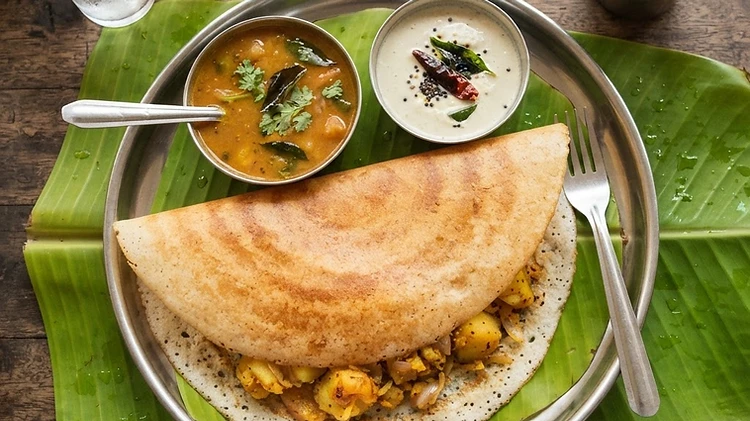
Crisp fermented rice crepe with spiced potato, rolled and served with sambar and coconut chutney.
Explore by hashtag
Total time
55 min
Servings
4
Difficulty
Medium
Cuisine
South Indian
Ingredients
- 2 cups idli rice (or short-grain rice)
- 1/2 cup urad dal (split black gram)
- 1 tsp fenugreek seeds
- 1 tsp salt
- Ghee or oil, for the griddle
- 4 potatoes, boiled
- 1 onion, sliced
- 1 tsp mustard seeds
- 10 curry leaves
- 1 green chilli, chopped
- 1 tsp grated ginger
- 1/2 tsp turmeric
- 1 cup coconut, fresh or frozen
- 2 green chillies for the chutney
- 1 cup toor dal and tamarind for the sambar
Halal Info
Masala dosa is inherently a vegetarian dish, which makes it an excellent choice for a halal diet. A cook must focus on the purity of the cooking fat, ensuring that only pure ghee or plant-based oils are used, avoiding any animal fats that lack halal certification. While traditional fermentation uses natural yeasts, one should ensure that no commercial additives or flavourings contain alcohol-based extracts. Since all base ingredients like rice, dal, and spices are plant-derived, the risk of non-halal contamination is minimal when prepared at home.
Instructions
- 1
Rinse the rice, urad dal and fenugreek separately, then soak them together in plenty of water for 5 to 6 hours.
- 2
Grind the soaked rice and dal with a little water to a smooth batter, then stir in the salt and leave it to ferment somewhere warm for 8 to 12 hours until it smells lightly sour and has risen.
- 3
For the filling, heat a spoon of oil, add the mustard seeds and curry leaves, then the onion, green chilli and ginger.
- 4
Add the turmeric and the boiled potatoes broken into chunks, season, and mash lightly so the filling stays soft.
- 5
Grind the coconut with green chilli, salt and a little water for the chutney, and simmer the toor dal with tamarind and sambar powder for the sambar.
- 6
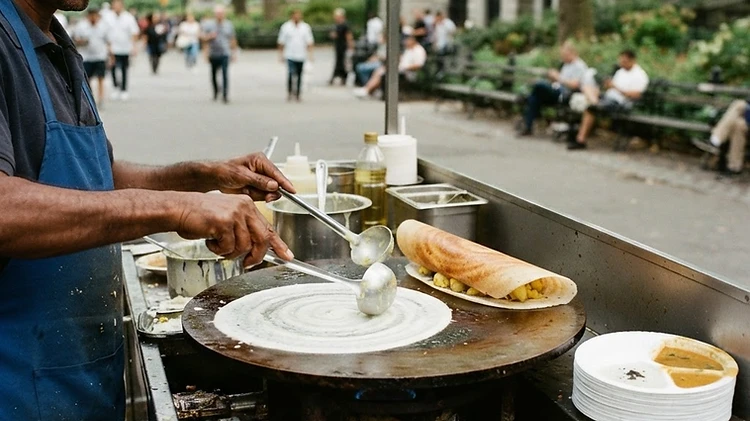
Heat a flat griddle until a drop of water sizzles, wipe it with a halved onion or an oiled cloth, then pour a ladle of batter in the middle and spread it outward in a spiral.
- 7
Drizzle ghee around the edge and cook until the base is golden and the top is set, then spoon the potato filling along the centre.
- 8
Fold the dosa over, slide it onto a plate, and serve straight away with the chutney and sambar.
Food History
The origins of the dosa are often debated among culinary historians, with some suggesting early mentions in ancient Tamil texts dating back over a thousand years. While earlier versions were likely thicker and softer, the evolution toward the modern paper-thin, crispy variant is frequently associated with the shifting culinary landscapes of Udupi and Tamil Nadu. The development of this dish relies heavily on the art of fermentation, a technique essential to tropical climates for preserving food while enhancing its nutritional profile and distinctive tangy flavour. Historically, the inclusion of the spiced potato masala filling is a more recent addition that gained widespread popularity during the late nineteenth and early twentieth centuries. As trade routes expanded, the availability of new produce and the influence of different regional cooking styles transformed the humble fermented pancake into a sophisticated street food staple. It remains a fluid tradition, with various sub-regions adapting the batter ratios and tempering spices to suit local agricultural harvests.
Cultural Background
In South Indian households, the preparation of dosa batter is a ritualistic process that signifies domestic care, as the fermentation timing must be perfectly calibrated to the ambient temperature. It is a dish that transcends social boundaries, enjoyed equally at roadside stalls for a quick morning breakfast and as a centerpiece during celebratory family gatherings. The act of eating a hot dosa with one's hands is deeply ingrained in the local etiquette, fostering a tactile connection to the meal. Regional variations are significant across the southern peninsula; for instance, while the Tamil Nadu style favours a thin and crisp texture, other regions might produce a slightly spongier version known as a set dosa. Regardless of the specific style, the dish serves as a communal anchor, bringing together families during busy mornings and providing a consistent sense of cultural identity to the diaspora.
Nutrition
Approx. 480 kcal per dosa with filling, 12g protein, 68g carbs, 16g fat (without the chutney and sambar).
Recipe by HalalRoute Editorial · Updated Oct 27, 2026
HalalRoute
Recipe Book
The HalalRoute Recipe Book
Every authentic recipe on the site — Indian, Chinese, Turkish, Italian and Western — compiled into one beautifully illustrated PDF, with a photo of every dish, full ingredient lists, step-by-step methods, halal notes and the food culture behind each recipe. Pick the size that suits you.
Taster Book
$5
15 recipes
The first 15 illustrated recipes — a pocket-sized way to try the collection.
Complete Book
$8
25 recipes
Every recipe published on the site, with a photo of each dish.
Complete Book + Bonus
$10
28 recipes
Everything in the Complete Book plus 3 exclusive bonus recipes.
The book grows every time a new recipe is published — buyers are sent the latest edition. New to the collection? first.