Fried, Breaded and Grilled: The Kitchen Science Behind KFC and McDonald's Flavour
Browning, pressure, oil temperature and salt placement decide how fast food tastes. Here is the food science that separates a shattering crust from a greasy one, and what home cooks can copy.
Ask why a KFC drumstick and a McDonald's patty taste the way they do, and most people reach for the spice list. The more honest answer is less romantic. Texture, colour and aroma in both chains come from a handful of controllable chemical reactions, and both companies have spent decades learning to tune them.
Start with browning. The Maillard reaction, the interaction between amino acids and sugars that begins above roughly 140 degrees Celsius, is responsible for the roasted, savoury crust on both products. Every kitchen chases it, but in different places. At KFC it happens in the coating, which is where the seasoning lives and where the crust forms. At McDonald's it happens on the surface of the beef, which is why the grill marks and the seared brown layer carry most of the flavour of the patty.
Pressure is the second variable and the most misunderstood. Water boils at 100 degrees Celsius in an open pan, and at a higher temperature inside a sealed pressure fryer. That single fact changes everything inside the chicken. The meat cooks faster without drying out, and because steam is trapped rather than allowed to escape, moisture stays in the meat instead of steaming the coating from below. The result looks contradictory until you taste it: a juicy interior wrapped in a crust that is crisp rather than soggy.
Oil temperature does the rest. Fried food absorbs oil largely when the surface is still wet and the temperature is too low, because the escaping steam no longer pushes oil away from the food. Commercial fryers hold oil at around 175 degrees Celsius and filter and replace it on a schedule, since degraded oil leaves a stale, fishy note that customers notice immediately even when they cannot name it.
Breading adhesion is a third factor, and the reason so many home attempts slide off. Flour sticks to a dry or a wet surface differently, and a coating held on by nothing more than hope will fall away in the oil. Commercial kitchens use a marinade containing egg or milk proteins to give the flour something to grab, then a rest so the starch hydrates before frying. Double-breaded pieces trap a layer of air between two coatings, which is what turns crunch into a genuine shatter.
Salt is the cheapest and most powerful tool in either kitchen, and its placement matters as much as its quantity. KFC salts the marinade, so seasoning travels into the meat and every bite tastes seasoned. McDonald's salts only the surface of the patty at the grill, which is why the first bite hits hard with salt and the middle tastes milder. Two flavour geometries, one ingredient.
Sugar is used for control rather than sweetness. The dextrose dip that McDonald's potato suppliers use before freezing is there to standardise colour across a crop of potatoes that varies in natural sugar content. Industrial consistency is less about a secret ingredient than about flattening out the variables of nature: potato variety, starch level, storage temperature, and how much sugar each batch contains.
The sauces hold the whole experience together. Big Mac sauce balances sweet, sour, salty and savoury in a way that makes the burger taste complete rather than sharp, which is precisely why children accept it so easily. Ketchup, mayonnaise and pickles do similar work at KFC, cutting richness and adding acidity to a piece of fried chicken that would otherwise taste flat.
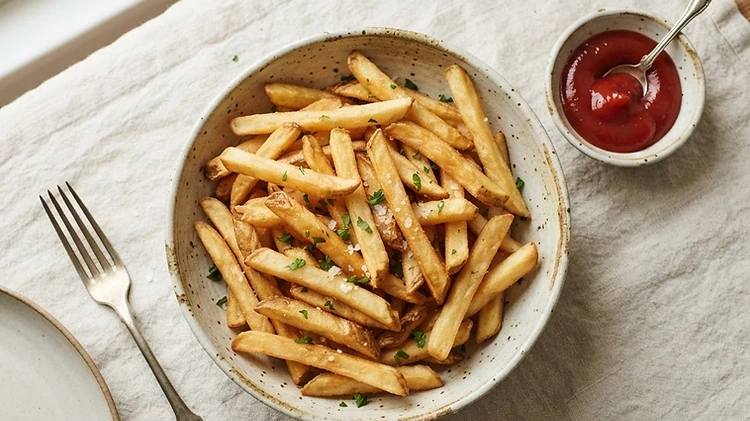
Holding times are the last piece and the least glamorous. Fries that sit under a lamp lose their crispness in minutes, not hours, because starch retrogrades and trapped steam softens the surface from the inside. Burgers are best within a couple of minutes of assembly for the same reason. This is why chains throw food away on a timer, and why the same burger eaten in your car tastes noticeably better than the one eaten after a ten-minute drive.
Home cooks can borrow every one of these lessons without any industrial equipment: brine chicken overnight and dry the surface before it meets the flour, hold your oil hotter than you think it should be, fry in small batches, and salt the burger patty only in the pan. None of these reactions has anything to do with whether food is halal. What decides that is the origin and slaughter of the meat, the presence of pork-derived ingredients such as gelatine or lard in coatings, sauces and desserts, and whether the oil that fries your chicken is also used for non-halal items.
Fast-food processes are proprietary and vary by market, so exact temperatures, timings and ingredient lists should be treated as typical examples rather than published specifications. Check the current local menu and certification before ordering.
Explore by hashtag