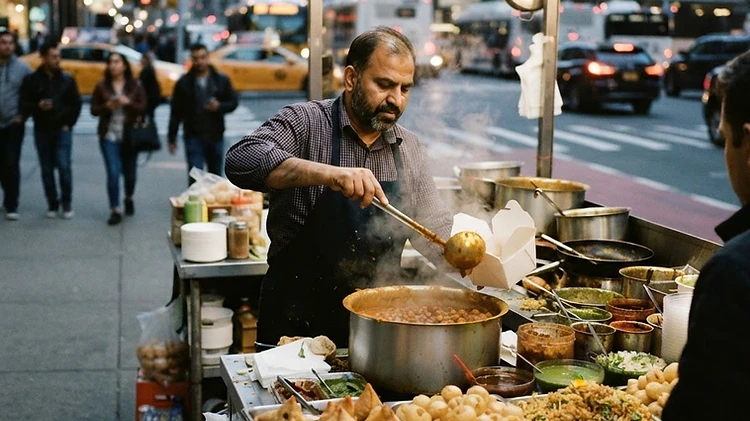
Pani Puri (Gol Gappa) with Two Waters
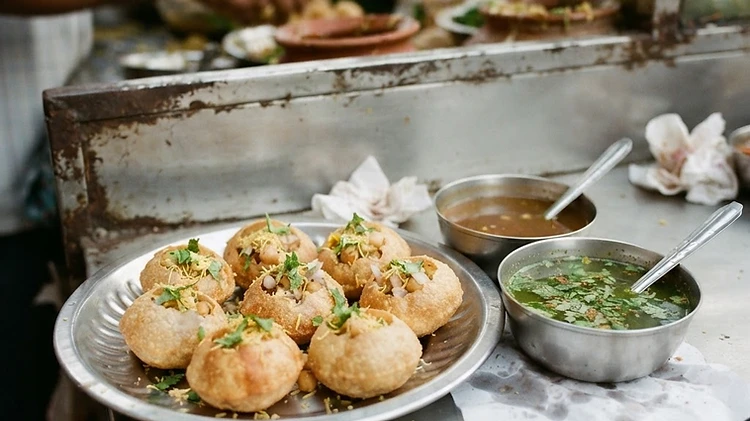
Crisp puris filled with potato and chickpeas, dunked in spiced mint water and sweet tamarind water.
Explore by hashtag
Total time
50 min
Servings
4
Difficulty
Medium
Cuisine
Indian Street Food
Ingredients
- 1 cup fine semolina
- 1/4 cup plain flour
- 1/2 tsp salt
- 1/4 tsp baking soda
- Oil, for deep frying
- 2 potatoes, boiled
- 1/2 cup boiled chickpeas
- 1 tsp roasted cumin powder
- 1 tsp chaat masala
- 1 large bunch mint
- 1 small bunch coriander
- 2 green chillies
- 1 inch ginger
- 1 tsp tamarind pulp for the mint water
- 1/2 tsp black salt
- 1/2 cup tamarind pulp for the sweet water
- 3 tbsp jaggery or sugar
- 2 dates, soaked
- 1/2 cup fine sev and chopped onion, to serve
Halal Info
This dish is naturally vegetarian, simplifying the requirements for a halal diet. A cook must focus on the purity of the frying oil, ensuring no cross-contamination occurs if the kitchen processes animal-derived fats like lard. While store-bought chaat masala is usually safe, verify that additives or stabilizers are plant-based. Ensure any bottled tamarind pastes do not contain ethanol or vinegar derived from non-halal sources. By sourcing fresh vegetables and using certified vegetable oils, a cook can easily maintain strict dietary compliance.
Instructions
- 1
Mix the semolina, flour, salt and baking soda with enough water to make a stiff dough, then cover it and rest for 20 minutes.
- 2
Roll the dough out very thin, cut 4cm rounds, and keep them under a cloth so they do not dry out.
- 3
Heat the oil to medium, fry the puris a few at a time, pressing them gently under the surface so they puff, then drain them on a rack.
- 4
Grind the mint, coriander, green chilli, ginger, tamarind, black salt and cumin with cold water for the mint water, and chill it.
- 5
Simmer the tamarind, jaggery and soaked dates with a little water until thick, then blend and strain it for the sweet water.
- 6
Mash the potato with the chickpeas, roasted cumin and chaat masala for the filling.
- 7
Take everything to the table: puris, filling, both waters, onion and sev.
- 8
Crack the top of each puri, spoon in the filling, dip it into the waters and eat it in one bite.
Food History
The precise origins of this iconic snack remain a subject of historical debate, as no definitive archival evidence tracks its initial creation. While some narratives associate early versions with the Magadha region, others suggest it emerged from the creative use of leftover dough in traditional bakeries. Throughout the nineteenth century, these crisp hollow shells gained prominence across the Indian subcontinent, evolving alongside the diverse street food cultures of local urban centers. The dish represents a sophisticated intersection of textures and temperatures, moving away from simple deep-fried dough towards a complex interplay of spiced liquids and legume fillings. Over the decades, the preparation techniques have transitioned from domestic kitchens to mobile street carts, standardizing the method of using semolina and flour for optimal crunch. As internal migration spread the popularity of the snack, local ingredients like chickpeas and potatoes were integrated to provide a balanced bite. It stands today as a classic example of nomadic street food innovation.
Cultural Background
In the Maharashtra region, consuming these snacks is a social ritual rather than a solitary act, frequently enjoyed at bustling evening stalls. The act of waiting in line at a cart for the vendor to hand over each individual piece is integral to the communal experience. Families often gather at these locations to share conversations while eating, as the dish requires immediate consumption to maintain the integrity of the crisp shell against the flavored waters. While the base components remain consistent, regional naming conventions signify deep local pride, with the snack known as gol gappa in northern districts and pani puri in the western territories. This culinary variety demonstrates how a simple snack adapts to local palates while maintaining its core identity as a quintessential street food staple that bridges generations during festivals and daily outings alike, reinforcing bonds within the local neighborhood communities.
Nutrition
Approx. 320 kcal per serving, 8g protein, 52g carbs, 10g fat.
Recipe by HalalRoute Editorial · Updated Oct 27, 2026
HalalRoute
Recipe Book
The HalalRoute Recipe Book
Every authentic recipe on the site — Indian, Chinese, Turkish, Italian and Western — compiled into one beautifully illustrated PDF, with a photo of every dish, full ingredient lists, step-by-step methods, halal notes and the food culture behind each recipe. Pick the size that suits you.
Taster Book
$5
15 recipes
The first 15 illustrated recipes — a pocket-sized way to try the collection.
Complete Book
$8
25 recipes
Every recipe published on the site, with a photo of each dish.
Complete Book + Bonus
$10
28 recipes
Everything in the Complete Book plus 3 exclusive bonus recipes.
The book grows every time a new recipe is published — buyers are sent the latest edition. New to the collection? first.