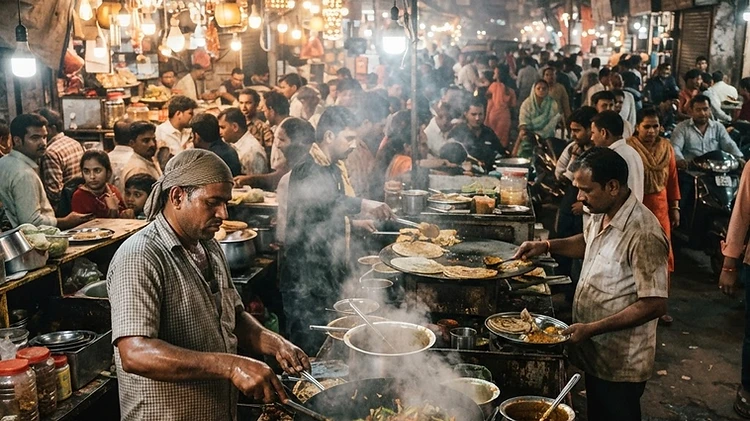
Kutchi Dabeli (Ahmedabad Street Food)
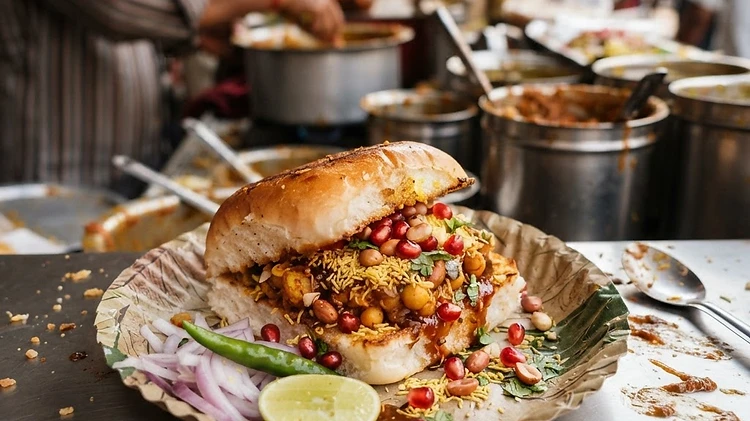
Buttered buns packed with spiced potato, two chutneys, pomegranate, peanuts and crunchy sev.
Explore by hashtag
Total time
40 min
Servings
6
Difficulty
Easy
Cuisine
Gujarati
Ingredients
- 6 soft pav buns
- 5 potatoes, boiled
- 2 tbsp dabeli masala
- 1 tbsp tamarind chutney
- 1 tbsp garlic chutney
- 1 tsp sugar
- Butter, for the griddle
- 1 onion, finely chopped
- 1/2 cup pomegranate seeds
- 1/2 cup roasted peanuts, crushed
- 1 cup fine sev
- Coriander, chopped
- Lime wedges, to serve
Halal Info
Most ingredients for dabeli are inherently plant-based and safe for consumption, but vigilance is required regarding commercial chutneys. Some mass-produced versions may contain hidden preservatives or stabilizers, such as wine vinegar or alcohol-based flavorings, so reading labels is essential. Additionally, check that the sev or processed snacks used for topping do not contain animal-derived fats or gelatin. Using freshly prepared chutneys and ensuring the butter used for the griddle is free from animal rennet or lard will ensure the recipe remains strictly compliant.
Instructions
- 1
Mash the potatoes while still warm, then mix in the dabeli masala, tamarind chutney, garlic chutney, sugar and salt.
- 2
Spread the potato mixture into a flat layer in a pan and warm it through for 2 minutes, then cut it into squares.
- 3
Slit each bun through the middle without cutting it in half, and toast it in butter on a griddle until both sides are golden.
- 4
Spread a little tamarind chutney inside one half and garlic chutney in the other.
- 5
Push a square of the potato mixture into the bun, then add onion, pomegranate seeds, crushed peanuts, sev and coriander.
- 6
Press the bun closed, butter the outside and press it on the griddle for a minute so the filling settles.
- 7
Serve straight away with lime, extra sev and more chutney on the side.
Food History
Kutchi dabeli originated within the Kutch region of Gujarat, India, during the mid-twentieth century. While precise historical records remain elusive, the dish is widely attributed to a local street food vendor who aimed to create a portable, flavorful snack by repurposing traditional spice blends and potato preparations. It subsequently gained massive popularity in Ahmedabad, where it evolved into a quintessential street food staple found on bustling city corners. The development of this dish reflects the clever fusion of indigenous Gujarati pantry ingredients and the logistical constraints of mobile vending. By utilizing readily available pav, a bread introduced to the Indian subcontinent during the colonial period, and incorporating indigenous spicy chutneys and locally harvested aromatics like peanuts and pomegranates, the recipe transformed from a modest snack into a complex culinary experience. Its growth across the state solidified its position as an essential element of modern Indian street food culture.
Cultural Background
Dabeli is primarily consumed as a mid-afternoon snack or a casual evening meal, frequently purchased from carts rather than prepared in domestic settings. Its cultural significance lies in the communal experience of street food culture, where the sensory contrast of textures and temperatures serves as a unifying experience for diverse urban demographics. Families often gather around mobile stalls, treating the consumption of these spicy buns as a social activity that transcends social stratification. Regional variations are common throughout Gujarat and neighboring states. While the core components of spiced potato mash and toasted pav remain constant, local cooks may experiment with the intensity of the garlic chutney or the inclusion of extra crunchy sev. In some households, the dish is prepared as an indulgent weekend treat, yet it is fundamentally rooted in the rapid, high-energy environment of the Gujarati street, symbolizing the state's vibrant culinary adaptability and love for complex flavor profiles.
Nutrition
Approx. 380 kcal per dabeli, 9g protein, 52g carbs, 15g fat.
Recipe by HalalRoute Editorial · Updated Oct 27, 2026
HalalRoute
Recipe Book
The HalalRoute Recipe Book
Every authentic recipe on the site — Indian, Chinese, Turkish, Italian and Western — compiled into one beautifully illustrated PDF, with a photo of every dish, full ingredient lists, step-by-step methods, halal notes and the food culture behind each recipe. Pick the size that suits you.
Taster Book
$5
15 recipes
The first 15 illustrated recipes — a pocket-sized way to try the collection.
Complete Book
$8
25 recipes
Every recipe published on the site, with a photo of each dish.
Complete Book + Bonus
$10
28 recipes
Everything in the Complete Book plus 3 exclusive bonus recipes.
The book grows every time a new recipe is published — buyers are sent the latest edition. New to the collection? first.